
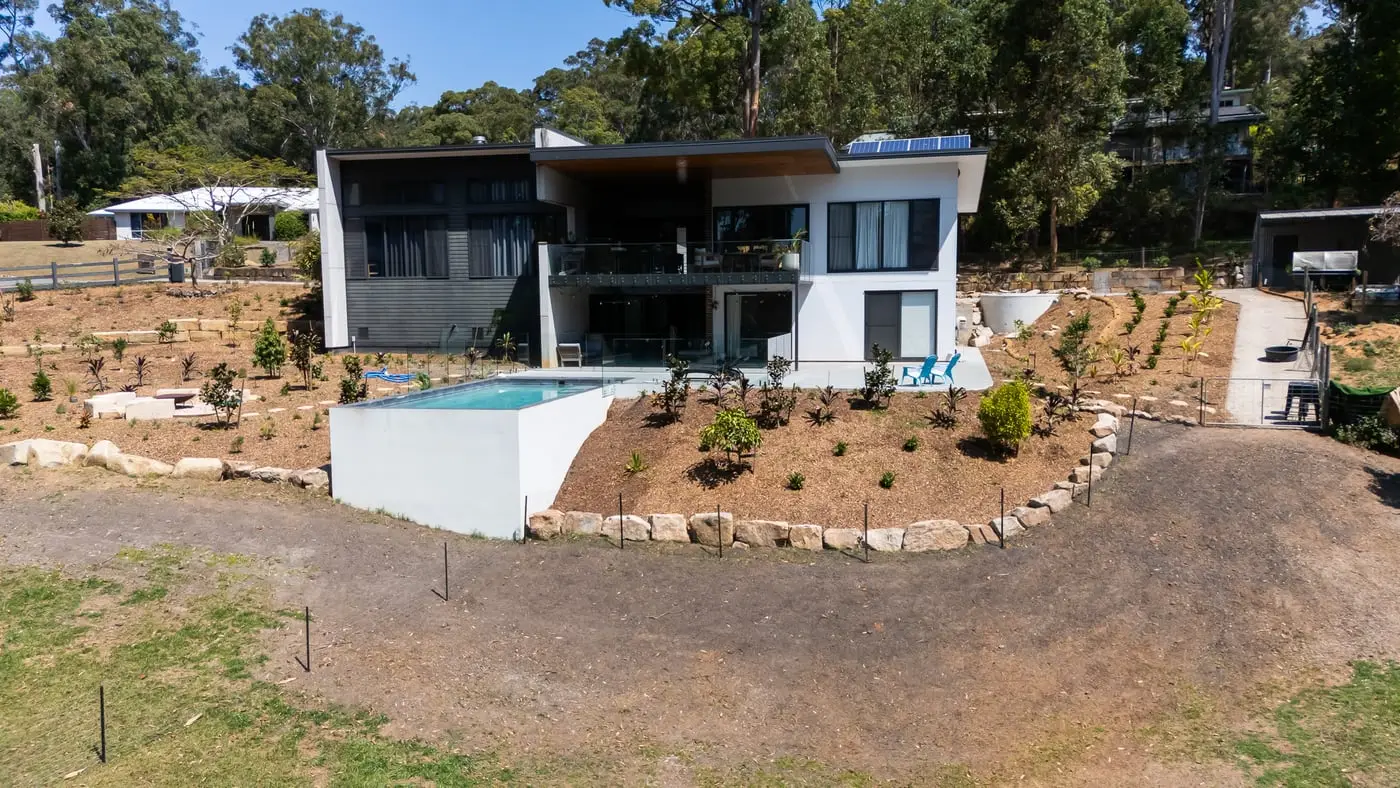
Water management
Backyard drainage solutions, Sunshine Coast
Landscape drainage designed into the ground, not bolted onto it afterwards.
A wet yard is a levels problem
Backyard drainage solutions on the Sunshine Coast are mostly sold by plumbers. A plumber fixes pipes. A waterlogged lawn is not a pipe.
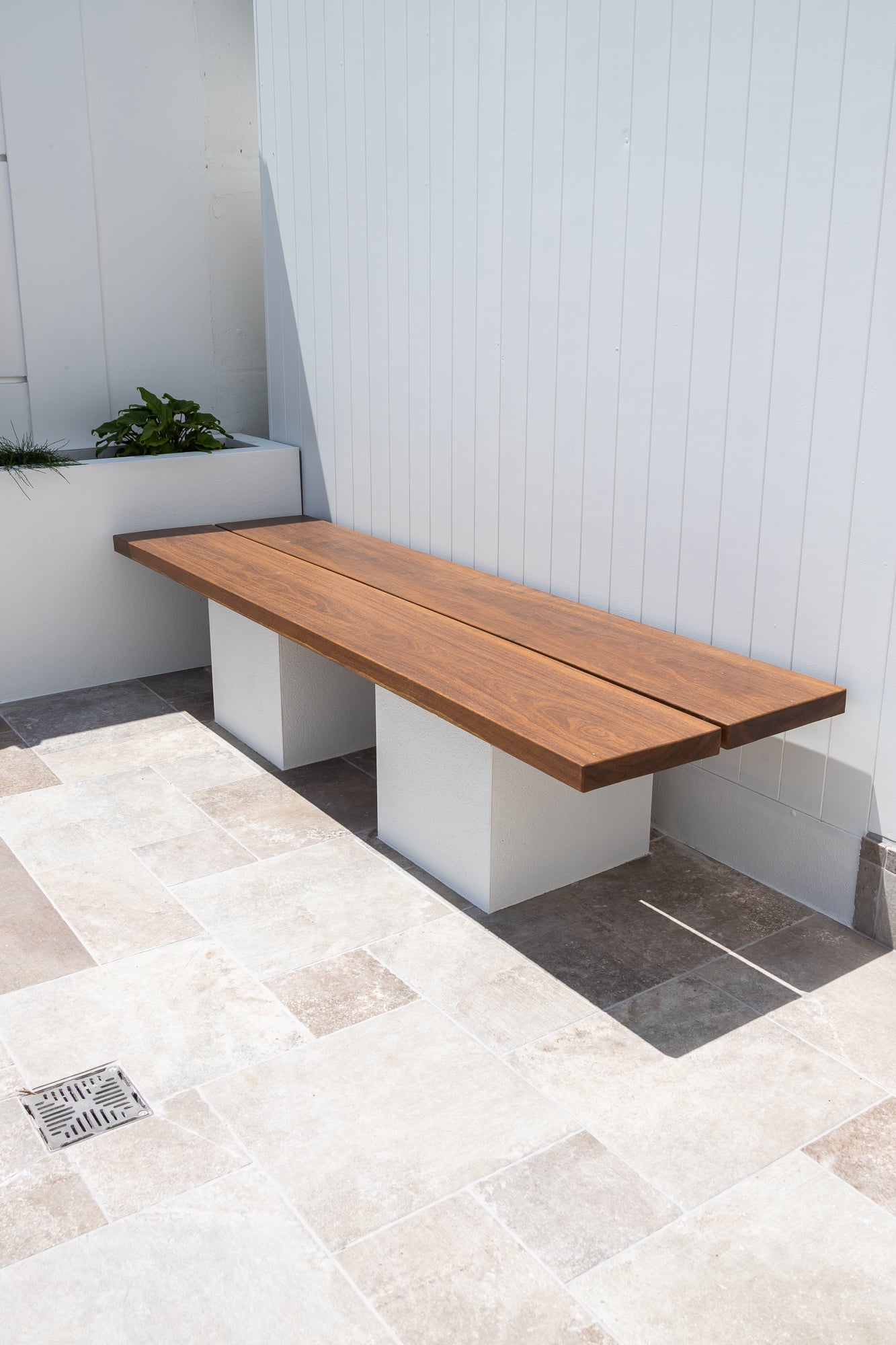
Search for help with a soggy backyard and almost everything that comes back is plumbing. Stormwater connections, blocked lines, downpipes. That work is real, and occasionally it is the whole answer. But when water pools on the lawn after every storm, sits against the slab, or runs off a slope and takes the garden with it, the problem is the ground, not the pipes.
That is earthworks. Levels, falls, soil, and where water is allowed to go once it leaves the roof and the paving. We solve it with the same machines and the same survey levels we use for landscape design and construction, because it is the same job. Our registered entity is Queensland Landscape & Drainage Group Pty Limited. Drainage has been in the name from the start.
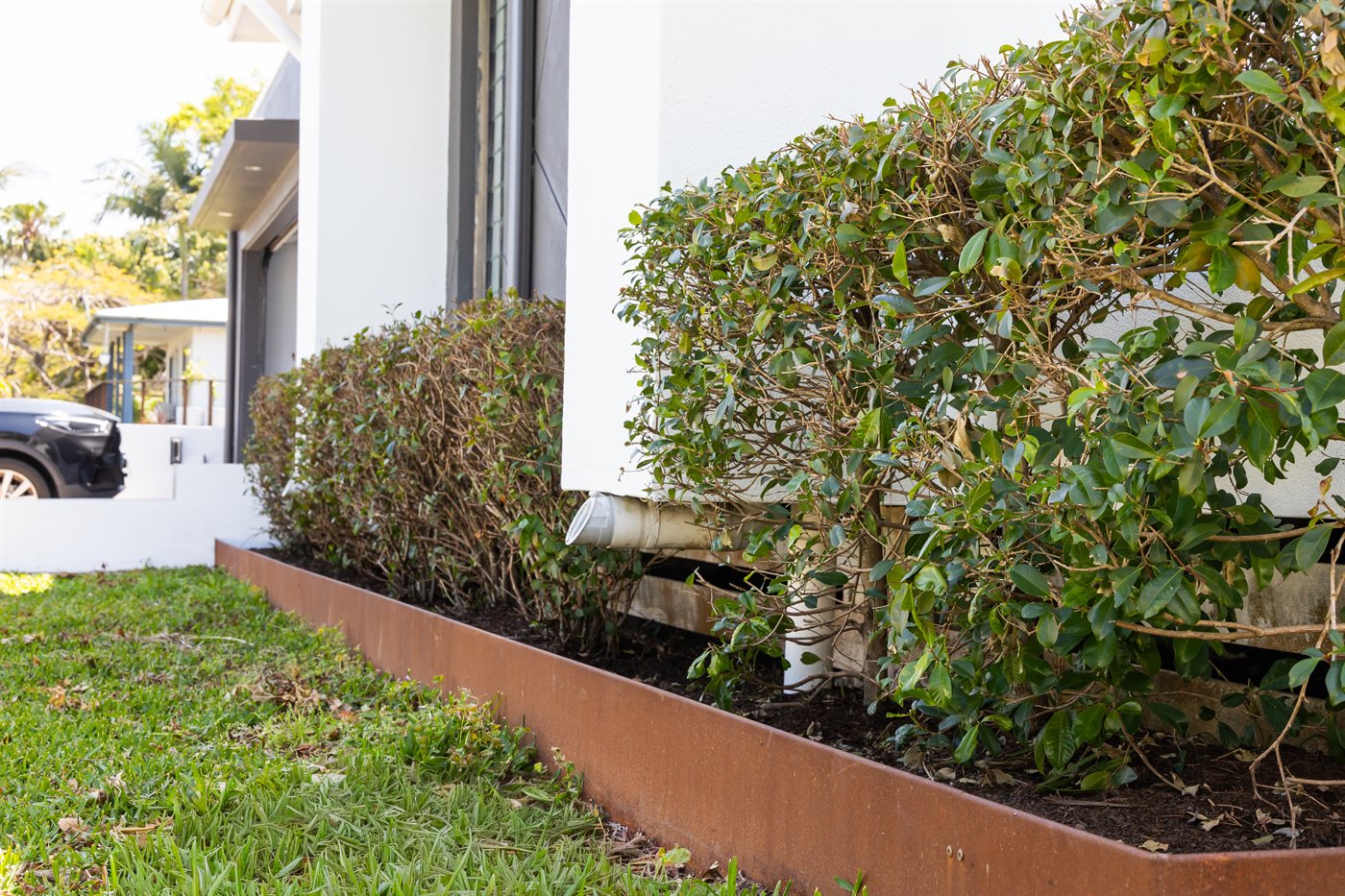
Why it happens
Where the water comes from
Nearly every drainage complaint we look at traces back to one of four things. Usually more than one at once, which is why single fixes rarely hold.
Surface water with nowhere to go
Roof water, paving runoff and sheet flow off the lawn all end somewhere. When falls are flat or run the wrong way, that somewhere is the lowest point in the yard, usually the part you wanted to use.
Clay and subsurface water
Much of the Coast sits on reactive clay. Water moves down through the topsoil, meets a layer it cannot pass, and stops. The lawn stays wet for days after the sky clears.
Slope, and whatever is below it
A sloping block sheds water onto whatever sits downhill. Often that is the house, the boundary, or the flattest and most usable part of the garden.
Coastal storm intensity
Storms here deliver a lot of water in a short window. A system sized for steady rain is the one that fails on the afternoon that actually matters.
What we install
The system, not the symptom
There is no single fix for yard drainage. There is a combination, specified after we have walked the site and taken levels, never off a photo.
- Subsoil and agricultural drains Slotted line bedded in aggregate and wrapped in filter fabric, laid to a real fall, intercepting water below the surface before it reaches the lawn.
- Spoon drains and swales Shaped surface channels that catch sheet flow and carry it across a block without a pipe in sight. On the right site they beat a trench.
- Channel and grate drains Linear drains at the edge of paving, patios, driveways and garage aprons, where water has to be stopped on a hard line.
- Pits, sumps and outlets Collection points, and the part most often missed: somewhere lawful for the water to actually discharge to.
- Regrading and falls Machine-shaped levels that move water away from the house before any pipe is involved, so the drainage has less work to do.
- Permeable surfaces and planting Gravel, open paving and garden beds that absorb volume instead of adding to it. Where the same trench can carry irrigation, we lay both at once.
- Retaining wall drainage Aggregate backfill, filter fabric and a drained subsoil line behind every structural wall we build. Walls fail from water, not load. See retaining walls.
How it gets built
Designed in, not added later
Drainage retrofitted into a finished garden is expensive, and it shows. A trench through new turf. A grate that lands in the middle of the paving. A pit where the tree was meant to go.
Designed with the landscape, none of that happens. Falls are set when the levels are set. Lines run under the paving before the paving goes down. Pits sit at the edges, in the planting, where nobody looks. A finished yard should show no evidence of the system holding it together.
The QLD Group holds QBCC 15282728, and a team of fifteen who work to the same set of levels for drainage as for everything else on site. Where a design touches council stormwater or moves overland flow across a boundary, we confirm the requirements with the local council first.
Common questions
Landscape drainage, answered
Is backyard drainage a plumbing job or a landscaping job?
It depends where the water is. A blocked or broken stormwater line is plumbing. A lawn that holds water, ground that falls back towards the house, or a slope shedding water the wrong way is levels and earthworks: landscape drainage. Most yards we inspect need the second.
Why does my lawn stay wet for days after rain?
Usually clay. Water passes through the topsoil, reaches a layer it cannot get through, and sits. A subsoil drain gives it a path out. Often the soil above the drain needs work too, because compacted ground holds water whatever sits under it.
Can drainage be installed in a finished garden?
Yes, and we do it regularly. It costs more than building it in from the start and it disturbs turf and planting, so we plan the route to open up as little as possible and reinstate what we cut through.
Do I need council approval for yard drainage in Queensland?
Subsoil and surface drainage contained within your own property generally does not. Connecting into council stormwater, or changing where water crosses a boundary, usually does. We confirm what applies with the local council before work starts rather than assuming it either way.
What do backyard drainage solutions cost on the Sunshine Coast?
Cost is driven by the length of the run, how much fall is available, the soil, machine access and where the water can lawfully discharge. We price from a site inspection, because a per-metre rate on drainage is a guess until someone has taken levels.
Ready to start the conversation?
Have the water looked at properly
A structured site visit where we walk the fall of your block, work out where the water is coming from and where it can go, and tell you what the yard needs before anyone quotes a number.