
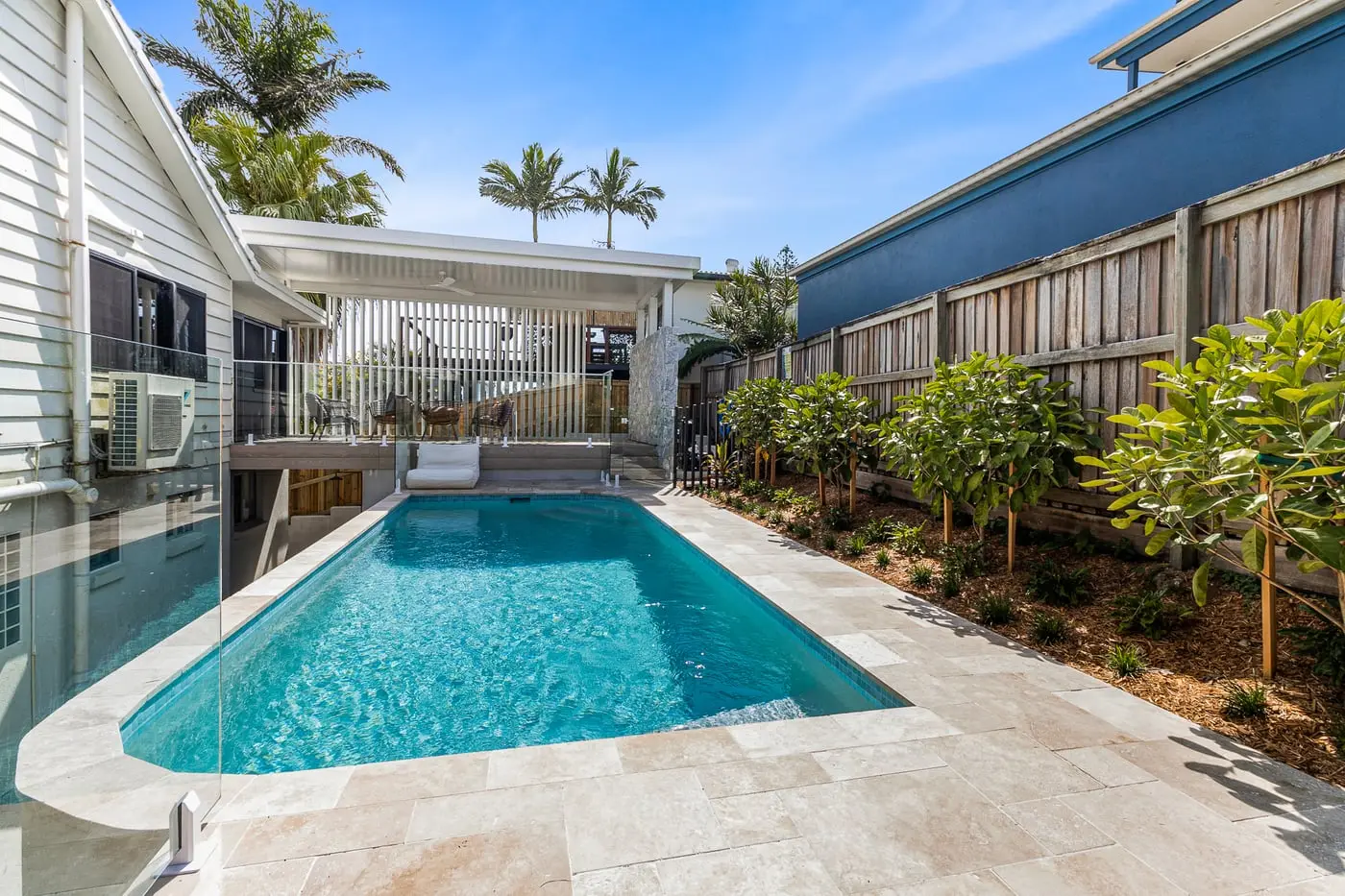
Surfaces and levels
Paving contractors, Sunshine Coast
Natural stone, travertine, porcelain and concrete: set into the levels and the drainage, not laid on top of them.
Paving is a system, not a product
Paving contractors on the Sunshine Coast are usually asked to price a surface. The more useful question is what the surface has to do.
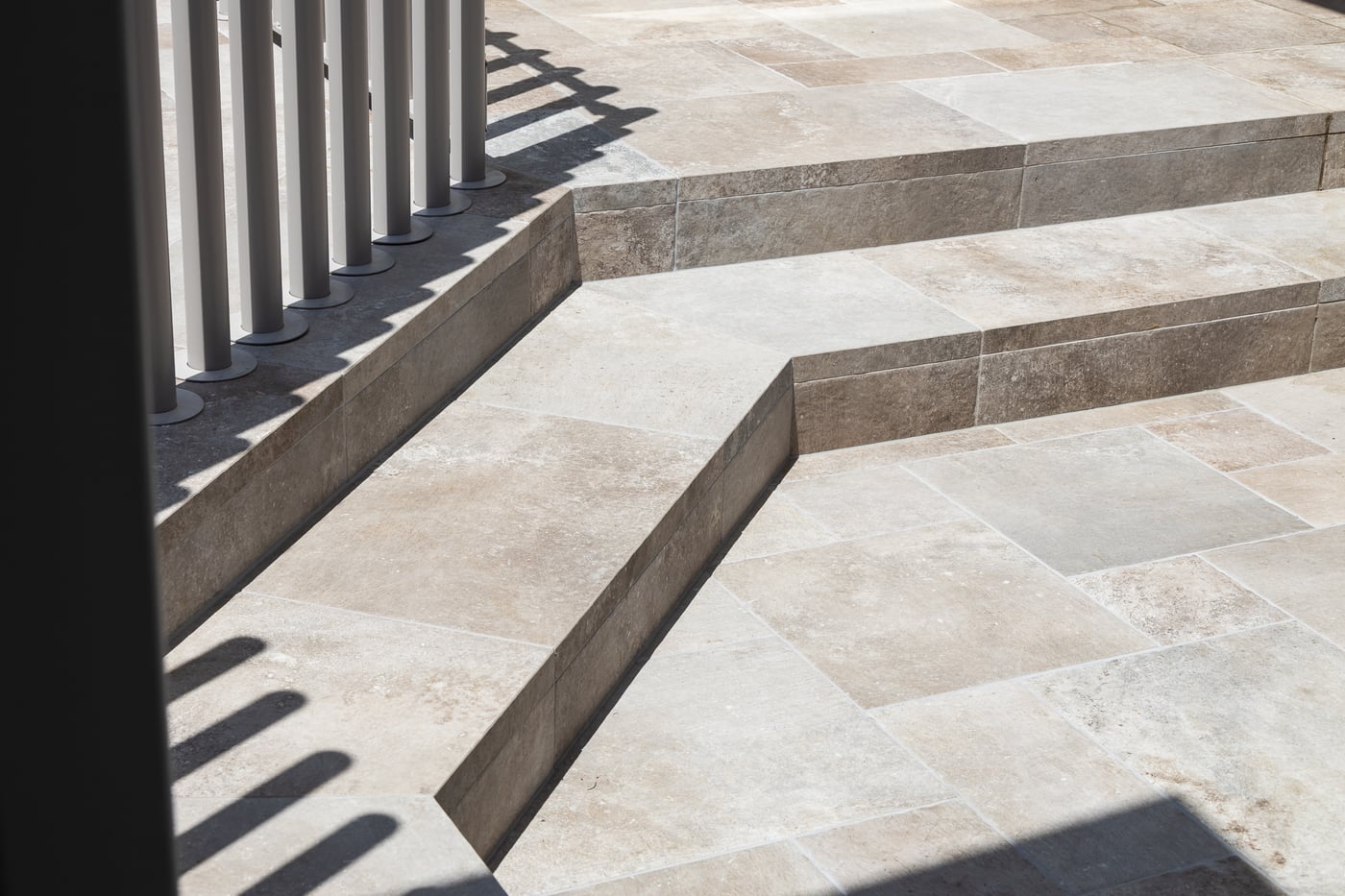
Most paving here is quoted as a rate per square metre. That number describes the top forty millimetres of the job. Everything that decides whether the surface is still flat, dry and safe in ten years sits underneath it, and none of it appears on the quote.
We set paving as part of a complete outdoor environment. Where the levels land, which way water runs, how the surface meets a pool, a lawn, a garden bed or a retaining wall, and how it behaves underfoot when it is wet. Those decisions are cheaper made together, at design stage.
Selection
Materials, honestly
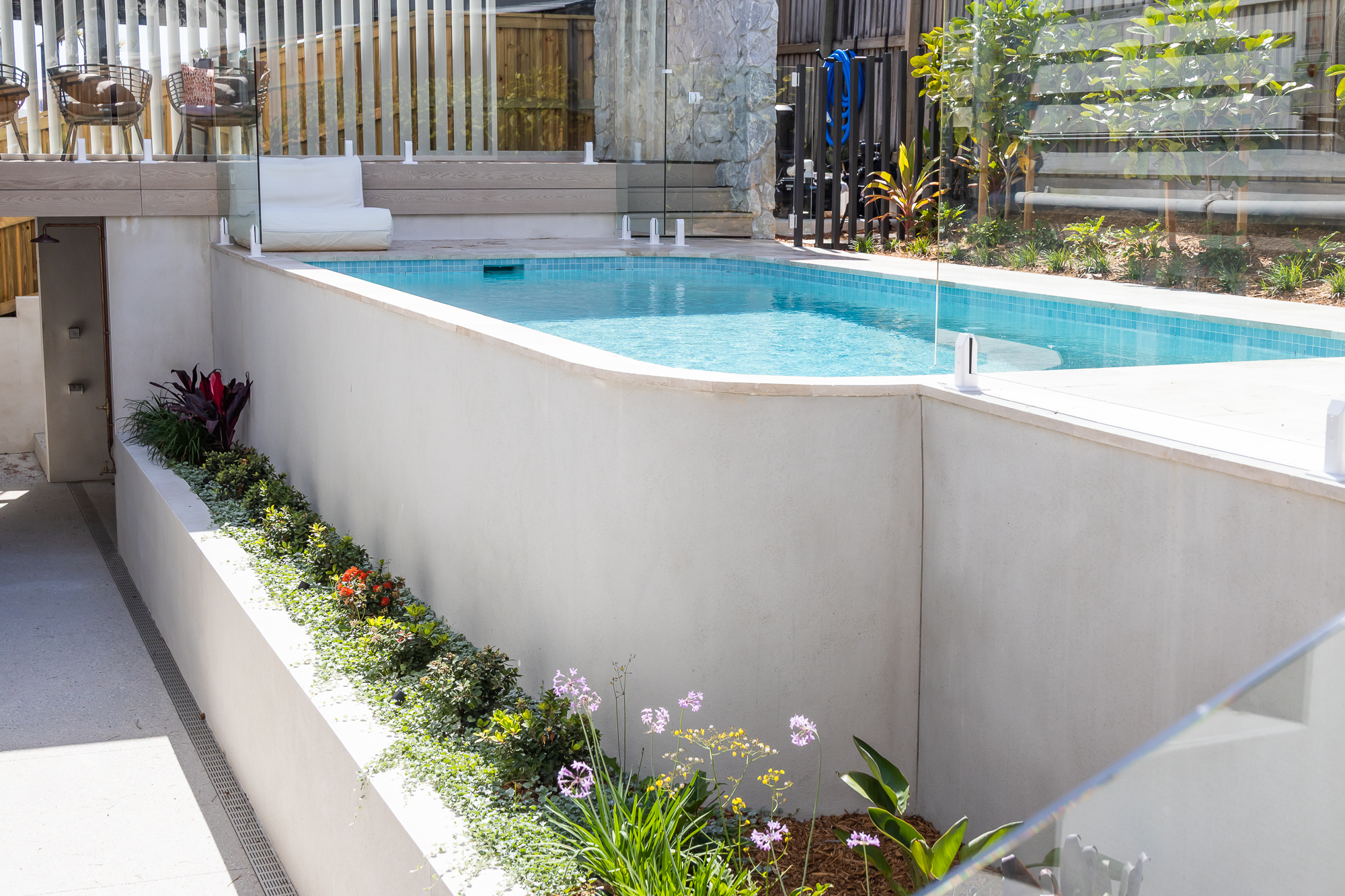
Every paving material trades something away: heat underfoot, grip when wet, staining, cost, and how it holds up a few hundred metres from salt water. We specify against use.
Travertine
Cooler underfoot than most stone and grips reasonably when wet, which is why it dominates pool surrounds here. It is also soft and porous: it marks, and it wants sealing.
Natural stone
Bluestone, granite and sandstone are denser and harder-wearing. Dark stone absorbs heat, and a bluestone terrace in full northern sun is not a barefoot surface in February.
Porcelain
Effectively non-porous and indifferent to salt and chlorine. The trade-offs are cost, a laying tolerance close to zero because nothing hides a lipped edge, and a uniformity that reads flat beside planting.
Concrete and exposed aggregate
Poured in place, so it handles the curves that unit paving fights, and it covers large areas cheaply. It will crack. The question is whether the control joints decide where.
Clay pavers
Colour comes from fired clay rather than an oxide, so it does not fade out. Durable, well suited to driveways, a natural match for brick homes. Less common in contemporary work.
The part nobody sees
Cheap paving fails from below
Pavers rarely wear out. They sink, they rock, they hold water and the joints open up. Every one of those is a preparation failure, and every one is expensive because the surface has to come up first.
- Substrate Excavated to depth and rebuilt in road base sized for the load. Foot traffic and a parked car are different specifications.
- Compaction Compacted in layers, not tipped and screeded. Settlement shows as dips and rocking pavers, usually in the second wet season.
- Falls Every paved surface needs a fall, and the fall has to go somewhere that exists.
- Drainage Slot drains, grates and pits set at design stage. Retro-fitting them into finished paving means lifting it.
- Edge restraint Unrestrained edges migrate and the field opens up behind them. Concrete haunching, or a built edge.
- Jointing Joint width, joint material, movement joints. On the coast this is where salt and moisture get in.
The hardest surface to get right
Pool surrounds and coping
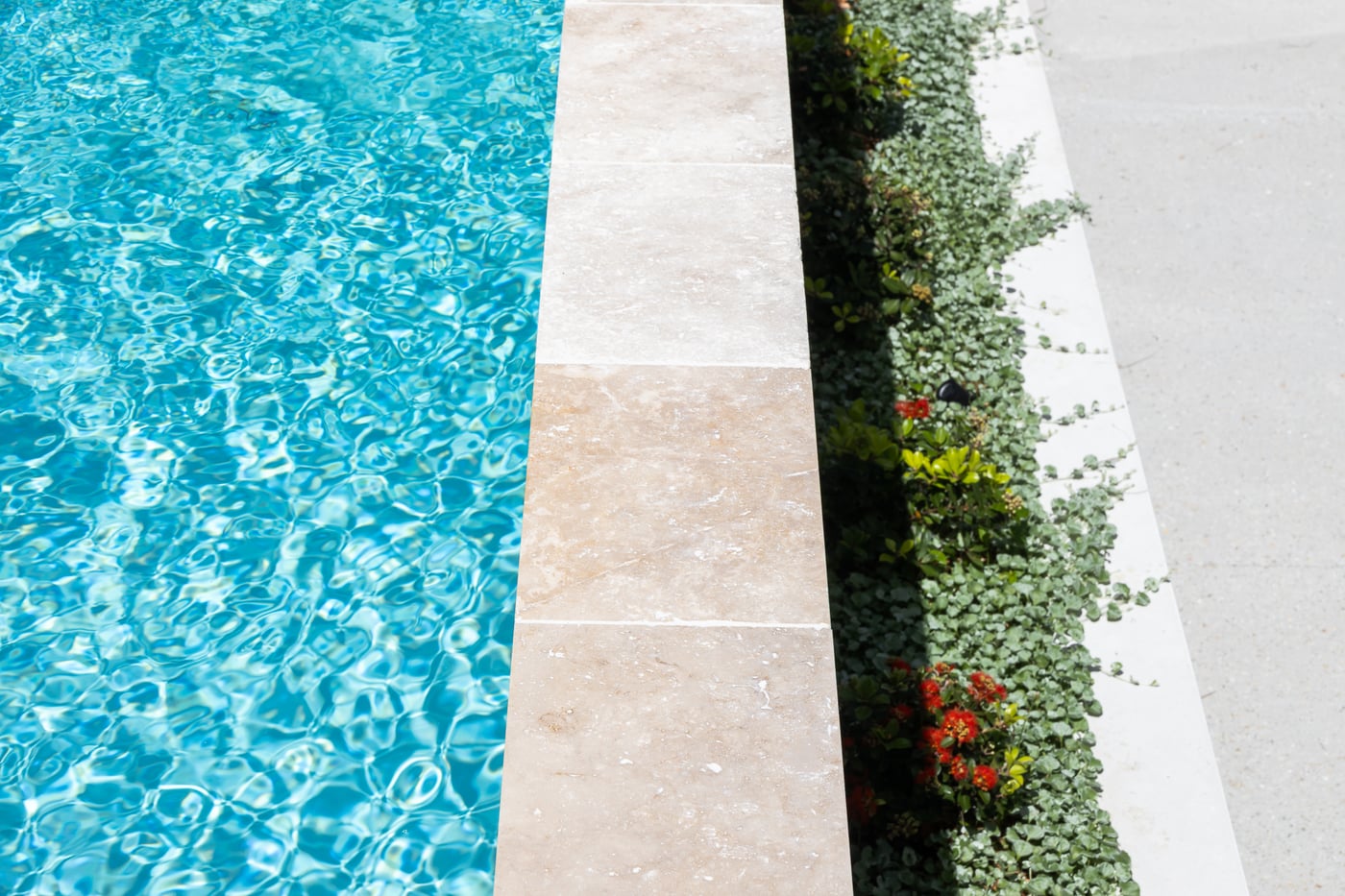
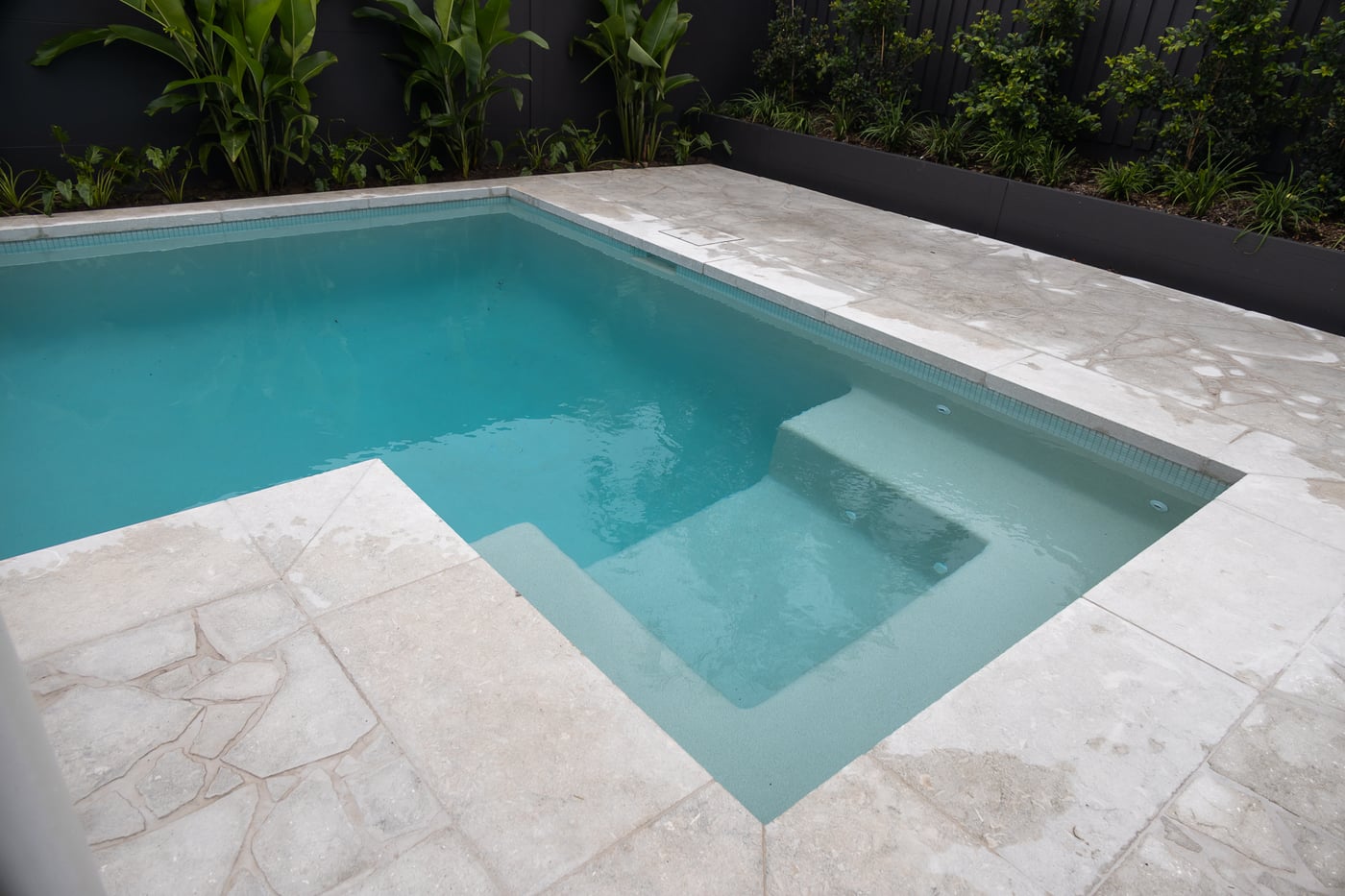
A pool surround has to do more than a terrace. It is walked on wet and barefoot, it sits in salt or chlorine, it carries the transition from coping to paving to lawn, and it has to shed water away from the shell.
That makes coping a design decision, not a finishing one. Overhang, edge profile, height against the waterline, and where the fall takes the water. We resolve those alongside the pool construction, because the same team builds both.
Common questions
Paving, answered
What does paving cost on the Sunshine Coast?
Material is only part of it. Area, access, how much excavation the levels demand, and whether drainage goes in at the same time move the number more than the paver does. We price from a site inspection, not a per-metre rate off a plan.
What is the best paving to use around a pool?
There is no single answer, only trade-offs. Travertine stays cooler underfoot and grips when wet, at the cost of being porous. Porcelain is harder and unaffected by salt and chlorine, but slip performance varies enormously between finishes. Test any pool surround barefoot and wet.
Can you pave over an existing concrete slab?
Sometimes. It depends on the condition of the slab, whether it already falls and where to, and how much height you can add before you foul door thresholds or pool coping. Where the slab is sound, overlaying is efficient. Otherwise it only postpones the problem.
Does travertine paving need sealing?
Travertine is porous, so sealing slows staining from spills and leaf litter, and it needs redoing periodically rather than once. Near salt water and chlorine, maintenance matters more, not less.
Do you take on paving as a standalone job?
Most of our paving is built as part of a larger outdoor environment, because that is where levels, drainage and planting get resolved together. We will look at standalone paving where the design intent is clear and the substrate can be done properly.
The QLD Group holds QBCC 15282728 and trades as Queensland Landscape & Drainage Group Pty Limited.
Ready to start the conversation?
Have the levels looked at first
A structured site visit where we walk the falls, look at access and drainage, and tell you what the paving needs to sit on before anyone quotes a rate.